Mental Wellness
Maintaining good mental health is crucial for overall well-being. It affects how we think, feel, and act in everyday situations. Here are some practical tips for improving mental wellness at home:
Reduce Stress Levels
Stress can have a significant impact on mental well-being. To manage stress effectively, try incorporating relaxation techniques such as deep breathing exercises, meditation, or yoga into your daily routine. Engaging in physical activity, maintaining a healthy diet, and getting enough sleep are also essential in reducing stress levels.
Stay Connected
Maintaining social connections is important for mental health. Stay in touch with friends and family members through phone calls, video chats, or social media. Join online communities or support groups to combat feelings of isolation and loneliness.
Establish Routine
Creating a daily routine can provide structure and stability, which are essential for mental wellness. Set regular wake-up and bedtime hours, schedule time for work, leisure, and self-care activities. Having a sense of purpose and accomplishment can boost your mood and overall mental health.
Practice Mindfulness
Mindfulness involves staying present in the moment without judgment. Practice mindfulness through activities like mindful breathing, mindful eating, or simply observing your surroundings. Being mindful can help reduce anxiety, improve focus, and enhance overall well-being.
Seek Professional Help
If you’re struggling with your mental health, don’t hesitate to seek professional help. Reach out to a therapist, counselor, or mental health professional for support and guidance. Therapy can provide valuable tools and strategies for managing stress, anxiety, depression, and other mental health issues.
Physical Fitness
Regular physical activity has a significant impact on mental health. Exercise is known to release endorphins, which are chemicals in the brain that act as natural painkillers and mood elevators. This can help reduce feelings of stress, anxiety, and depression, while also improving overall cognitive function.
Simple Home Workout Routines
- Bodyweight exercises like squats, lunges, push-ups, and planks can be done without any equipment and are effective in improving both physical and mental well-being.
- Yoga or Pilates routines can help improve flexibility, strength, and mental relaxation, promoting a sense of calm and well-being.
- High-intensity interval training (HIIT) workouts are great for boosting mood and reducing symptoms of anxiety and depression in a short amount of time.
Benefits of Regular Physical Activity
- Improved mood and reduced symptoms of anxiety and depression
- Increased self-esteem and confidence
- Better sleep quality
- Enhanced cognitive function and focus
- Reduced stress levels and better stress management
Healthy Eating
Maintaining a balanced and nutritious diet is crucial for overall health, including mental well-being. The food we consume can have a significant impact on our mood, energy levels, and cognitive function.
The Impact of Diet on Mental Health
Eating a diet rich in fruits, vegetables, whole grains, lean proteins, and healthy fats provides essential nutrients that support brain function and neurotransmitter production. On the other hand, consuming excessive amounts of processed foods, refined sugars, and unhealthy fats can lead to inflammation in the body and negatively affect mental health.
- Aim for a variety of colorful fruits and vegetables to ensure you are getting a range of vitamins, minerals, and antioxidants.
- Incorporate whole grains like quinoa, brown rice, and oats for sustained energy levels and to support serotonin production.
- Include sources of omega-3 fatty acids such as fatty fish, flaxseeds, and walnuts to reduce inflammation and support brain health.
- Limit intake of sugary beverages, refined carbs, and processed foods that can contribute to mood swings and fatigue.
Remember, a well-balanced diet not only nourishes your body but also plays a crucial role in maintaining optimal mental health.
Preventive Care
Strategies for improving mental health at home – Preventive care for mental health involves taking proactive steps to maintain overall well-being and prevent the onset of mental health issues.
Identifying Early Signs of Mental Health Issues
It is essential to be aware of the early signs of mental health issues to address them promptly. Some strategies for identifying these signs at home include:
- Regularly checking in with yourself and loved ones for any changes in mood or behavior.
- Keeping an open line of communication to discuss any concerns or struggles.
- Noticing changes in sleeping or eating patterns, as they can be indicators of underlying issues.
Seeking Professional Help and Support
When early signs of mental health issues are identified, seeking professional help and support is crucial. Here are some resources for getting the assistance needed:
- Reach out to a mental health professional, such as a therapist or counselor, for guidance and therapy sessions.
- Contact local mental health hotlines or crisis intervention services for immediate support in times of distress.
- Explore online therapy platforms or support groups for additional resources and community connection.
Balanced Diet: Strategies For Improving Mental Health At Home
A balanced diet plays a crucial role in maintaining good mental health. It involves consuming a variety of nutrients in appropriate proportions to support overall well-being.
What is a Balanced Diet for Mental Health?
A balanced diet for mental health includes a mix of macronutrients (carbohydrates, proteins, and fats) and micronutrients (vitamins and minerals). It is important to focus on whole, nutrient-dense foods while limiting processed and sugary items.
- Eat plenty of fruits and vegetables: These are rich in vitamins, minerals, and antioxidants that support brain function and reduce inflammation.
- Incorporate whole grains: Whole grains provide a steady release of energy and contain fiber that supports gut health, which is linked to mental well-being.
- Include lean proteins: Foods like poultry, fish, legumes, and nuts are sources of essential amino acids that help regulate mood and cognitive function.
- Healthy fats are essential: Omega-3 fatty acids found in fatty fish, flaxseeds, and walnuts support brain health and have been linked to reduced risk of depression.
The Importance of Hydration
Staying hydrated is key to maintaining good mental health. Dehydration can impact cognitive function, mood, and overall well-being. It is recommended to drink an adequate amount of water throughout the day to support optimal brain function and overall health.
Regular Exercise
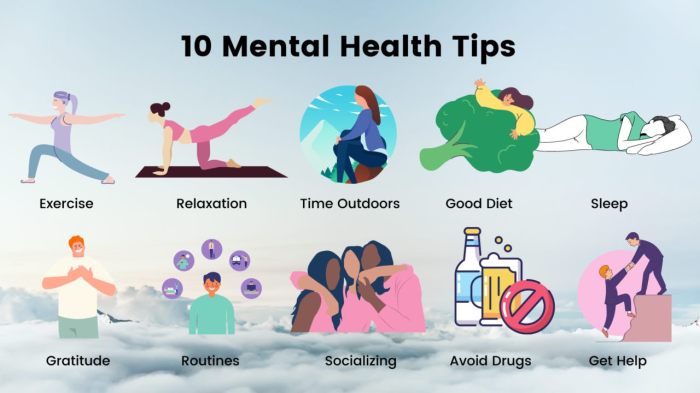
Regular exercise plays a crucial role in improving mental health by releasing endorphins, reducing stress, improving sleep, and boosting self-esteem.
Types of Exercises for Mental Well-being, Strategies for improving mental health at home
- Cardiovascular Exercises: Activities like running, cycling, or swimming help increase heart rate and release endorphins, known as the “feel-good” hormones.
- Strength Training: Lifting weights or using resistance bands can improve mood, reduce anxiety, and enhance cognitive function.
- Yoga and Pilates: These mind-body exercises focus on breathing techniques, mindfulness, and relaxation, promoting mental clarity and reducing stress levels.
- Dance and Aerobic Classes: Fun and energetic workouts can elevate mood, boost confidence, and provide a social aspect that enhances mental well-being.
Mental Health Benefits of Regular Physical Activity
Regular physical activity not only improves physical health but also has significant mental health benefits. Exercise helps in:
- Reducing symptoms of anxiety and depression.
- Enhancing cognitive function and memory.
- Boosting self-esteem and confidence levels.
- Improving sleep quality and reducing stress.
- Promoting overall feelings of well-being and happiness.
Holistic Wellness
Holistic wellness is an approach to health that considers the whole person, including their mental, emotional, and physical well-being. It emphasizes the interconnectedness of these aspects and recognizes that they all play a role in overall wellness. When it comes to mental health, holistic practices can have a significant impact on promoting well-being and reducing stress and anxiety.
Practices for Promoting Mental Well-being
- Practicing mindfulness and meditation to reduce stress and improve mental clarity.
- Engaging in activities that bring joy and relaxation, such as hobbies or spending time in nature.
- Connecting with others through meaningful relationships and social support.
- Ensuring a good work-life balance to prevent burnout and promote mental health.
Importance of Addressing Mental, Emotional, and Physical Health
Addressing mental, emotional, and physical health is crucial for overall wellness as these aspects are interconnected and influence each other. Neglecting one can have a negative impact on the others, leading to imbalances and potential health issues. By taking a holistic approach to wellness, individuals can better manage stress, improve mood, and enhance their overall quality of life.
Chronic Diseases
When dealing with chronic diseases, it is important to recognize the impact they can have on mental health. The constant management, symptoms, and uncertainty can lead to increased stress, anxiety, and depression for individuals living with these conditions.
Managing Mental Health with Chronic Illnesses
- Establish a support system: Surround yourself with understanding family and friends who can provide emotional support.
- Seek professional help: Consider therapy or counseling to learn coping mechanisms and strategies to manage your mental health.
- Practice self-care: Engage in activities that bring you joy and relaxation, such as hobbies, meditation, or mindfulness exercises.
- Stay informed: Educate yourself about your condition to have a better understanding and control over your health.
Improving Quality of Life with Chronic Diseases
- Follow a balanced diet: Eating nutritious foods can help manage symptoms and improve overall well-being.
- Stay active: Incorporate gentle exercises or physical activities based on your abilities to boost energy levels and mood.
- Get enough rest: Prioritize sleep and establish a bedtime routine to ensure proper rest and rejuvenation.
- Stay connected: Socialize with loved ones or join support groups to combat feelings of isolation and loneliness.
Immunity Boosters
Having a strong immune system is not only crucial for physical health but also plays a significant role in maintaining good mental health. The relationship between immunity and mental well-being is interconnected, as a healthy immune system can help reduce inflammation in the brain and support overall cognitive function.
Natural Immunity Boosters for Mental Well-being
- Eating a diet rich in fruits and vegetables, which are high in antioxidants and vitamins that can help boost immunity and support brain health.
- Regularly consuming probiotic-rich foods like yogurt and kefir to promote a healthy gut microbiome, which is linked to improved immune function and mental well-being.
- Getting enough vitamin D from sunlight exposure or supplements, as vitamin D deficiency has been associated with weakened immunity and increased risk of depression.
- Incorporating immune-boosting herbs and spices like turmeric, garlic, and ginger into your meals, as they have anti-inflammatory and antioxidant properties that can support both physical and mental health.
Importance of a Strong Immune System for Mental Health
A strong immune system is essential for protecting the body against infections and diseases, but it also plays a vital role in regulating inflammation and oxidative stress in the brain. Chronic inflammation and oxidative damage have been linked to mental health conditions like depression and anxiety, highlighting the importance of maintaining a healthy immune system for overall well-being.
Answers to Common Questions
Can simple home workout routines really improve mental well-being?
Yes, engaging in physical activity at home can release endorphins, reduce stress, and boost overall mood and mental health.
How can diet impact mental health?
Diet plays a crucial role in mental health as certain foods can influence neurotransmitter activity, affecting mood and cognitive function.
What are some preventive care strategies for mental health at home?
Practicing mindfulness, setting boundaries, seeking social support, and addressing stress are key preventive measures for maintaining good mental health.
Why is immunity important for mental health?
A strong immune system can protect against infections and reduce inflammation, which can positively impact mental well-being.

More Stories
Benefits of holistic approaches to chronic disease management: Improving Health Holistically
Importance of hydration for a healthy immune system: Key to a Strong Immunity
Importance of regular screenings for chronic disease detection: Early detection for better health outcomes